The interviews
Common questions. Individual experience. Different perspectives.
Each contribution is a professionally filmed conversation of approximately 90 minutes.
The interview combines a common comparative core with questions selected specifically for the contributor’s field, jurisdiction, career and areas of distinctive experience. The common questions allow the project to compare how practitioners approach the same professional problem; the tailored questions allow each conversation to go where that practitioner’s experience is most valuable.
The tone is conversational and reflective. Contributors are not being asked to deliver a lecture or defend a particular school of practice. The most useful answers are often conditional: what you might do, what you would want to know first, when you would choose differently, what can go wrong, and what you might actually say in the room.
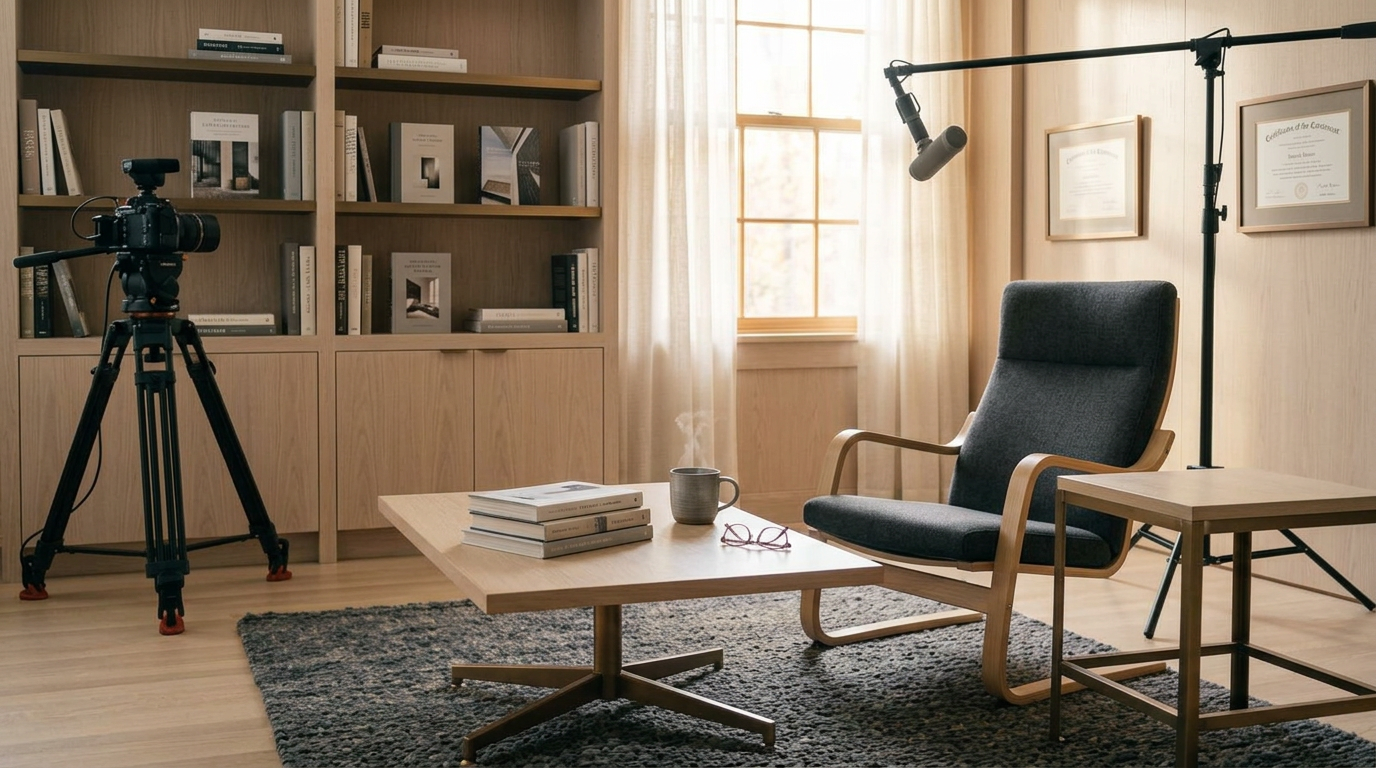
A camera, a light, a boom — the working setup for each conversation, arranged around the contributor wherever practicable.
Practical details
Designed to be respectful of your time
Filming and production are organised and funded by the project. Participation is by invitation.
- Length
- Approximately 90 minutes
- Format
- Professionally filmed interview/conversation
- Location
- Arranged around the contributor where practicable
- Production
- Organised and funded by the project; no production cost to the contributor
- Questions
- Common comparative questions plus tailored specialist questions
- Preparation
- A short project brief and practical filming information provided in advance
- Confidentiality
- No identifiable confidential case material is requested; anonymised experience is welcome
- Consent
- A contributor consent and release is provided before filming
- Review
- A process is available for factual/transcription, confidentiality and material-context concerns
- Use
- The book, longer-form companion material and other attributed project materials as described in the contributor arrangements
Examples of the questions
- What does an experienced practitioner notice that an inexperienced practitioner often misses?
- How do you work out what a dispute is really about rather than simply accepting the issues as first presented?
- How do you decide when to intervene, ask a question or remain silent?
- When the process appears stuck, what do you consider before deciding what to do next?
- How do you reality-test without taking over the parties’ decision?
- Where do experienced practitioners genuinely disagree?
- What mistake or experience most changed the way you practise?
- How do you expect AI and technology to change the profession over the next five to ten years?
- What should the next generation of practitioners understand that is difficult to teach?
What happens after you accept
Six straightforward steps
There is no expectation that you commit to a filming date immediately.
- 01
We agree a suitable filming window and location.
- 02
You receive a concise project brief, proposed interview areas and practical production information.
- 03
You receive the contributor consent/release and relevant privacy information before filming.
- 04
The interview is professionally recorded.
- 05
The material is transcribed, reviewed and edited for the book and companion collection in accordance with the contributor arrangements.
- 06
Where appropriate, selected professionally edited extracts may be provided for your own professional channels.