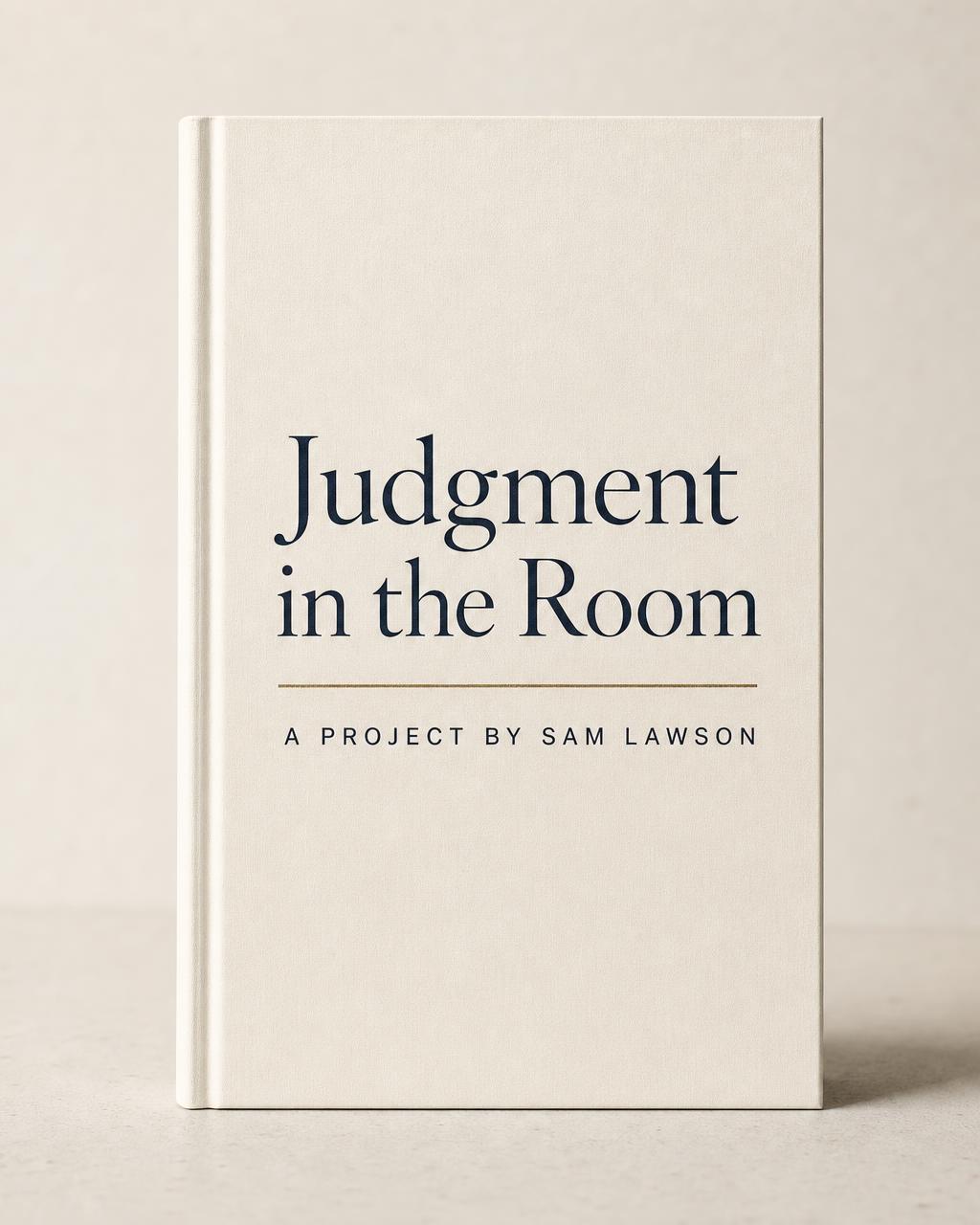
The book
Professional judgment is everywhere in dispute resolution and surprisingly difficult to capture in writing.
Judgment in the Room is being built from long-form conversations with practitioners who have spent years inside difficult disputes.
Its subject is not a new mediation model. It is the reasoning that sits underneath practice: what experienced practitioners notice, how they interpret what they see, how they choose between several defensible interventions and why they sometimes do the opposite of what a textbook might suggest.
The book will be thematic rather than a sequence of interview profiles. Practitioner voices will be brought together around the moments that matter — allowing readers to see agreement, disagreement, context and exception.
Four ideas at the centre of the book
Experience
How does repeated exposure to conflict change what practitioners notice?
Judgment
How do experienced practitioners choose between several reasonable courses of action?
Difference
Where do respected practitioners disagree, and what explains those differences?
Legacy
What knowledge should be passed to the next generation before it is lost?
Indicative thematic structure
The shape of the book
The final structure will follow the strength of the interview material. The outline below is indicative only.
- 01
Entering the room
Preparation, diagnosis, process design and trust
- 02
Reading the room
Communication, emotion, dignity, culture, power and silence
- 03
Difficult moments
Impasse, unrealistic positions, difficult behaviour and decisions under pressure
- 04
Changing the conversation
Questions, reframing, reality testing, negotiation and intervention
- 05
Where good practitioners disagree
Legitimate differences in method, philosophy and judgment
- 06
Becoming the practitioner
Mistakes, experience, supervision, professional development and what cannot easily be taught
- 07
The profession in transition
Online practice, AI, changing expectations and the enduring human role